Bi-Directional Pile Load Test System (Self-Balancing Load Box)
Pile load testing system utilizing a self-balancing hydraulic load box driven by multiple jacks to evaluate pile bearing capacity
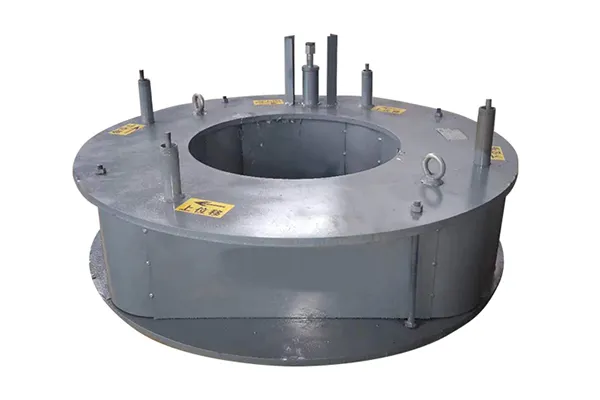
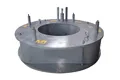
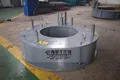
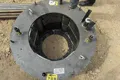
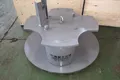
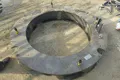
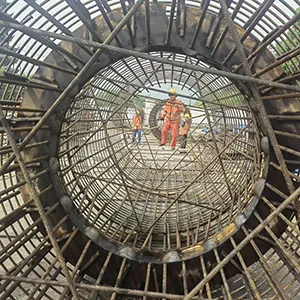
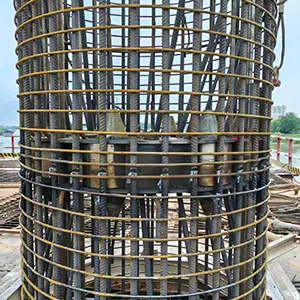
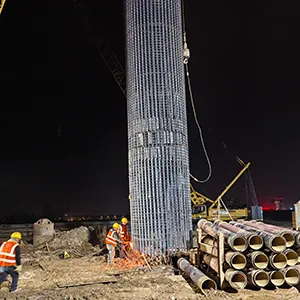
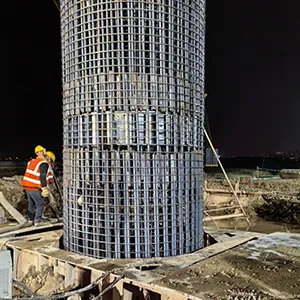
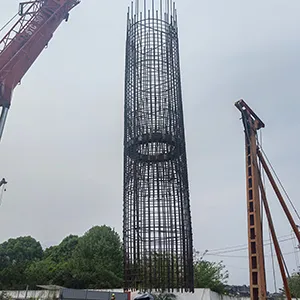
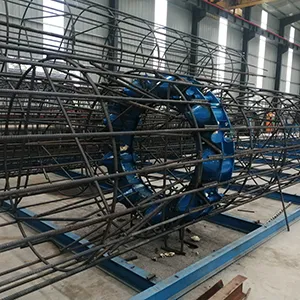
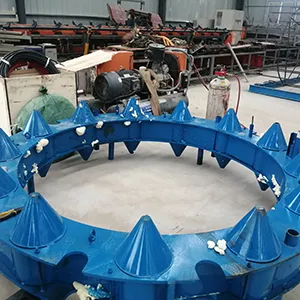
The bi-directional pile load test system is an efficient testing method for evaluating pile bearing capacity using the self-reaction principle of the test pile. The system consists of a hydraulic load box composed of multiple jacks, installed either at the pile tip or at a designated balance point along the pile. After the concrete reaches the required strength, pressure is applied through a ground-connected hydraulic pump. This loading method enables the system to accurately generate both end-bearing and side friction resistance, allowing precise evaluation of pile bearing performance.
We provide integrated end-to-end services, including load test scheme design, balance-point calculation, equipment manufacturing, equipment calibration, on-site installation, and test data acquisition and analysis. These services ensure accurate and reliable pile foundation testing solutions.
As a Pile Foundation Bearing Capacity Testing System, it is suitable for testing:
- Various bored piles
- Cast-in-place piles (including large-diameter and deep piles)
- Underground metro excavation: Essential for assessing pile foundation performance in underground transit projects.
- High-rise building clusters: Necessary for evaluating pile behavior under high-load requirements.
- Large-diameter bridge piles: Require high-precision testing to ensure structural safety in bridge engineering.
- High-capacity static load testing: The system supports large static load applications.
- Stable operation in complex environments: Performs reliably underwater, on slopes, underground, and in other challenging geological conditions.
- Customized loading schemes: Tailored according to different soil and rock characteristics to accurately reflect specific geological strata.
- Self-balancing load box: Adopts the reaction balance principle to ensure stability and safety during testing, effectively reducing risks from equipment failure or improper operation.